


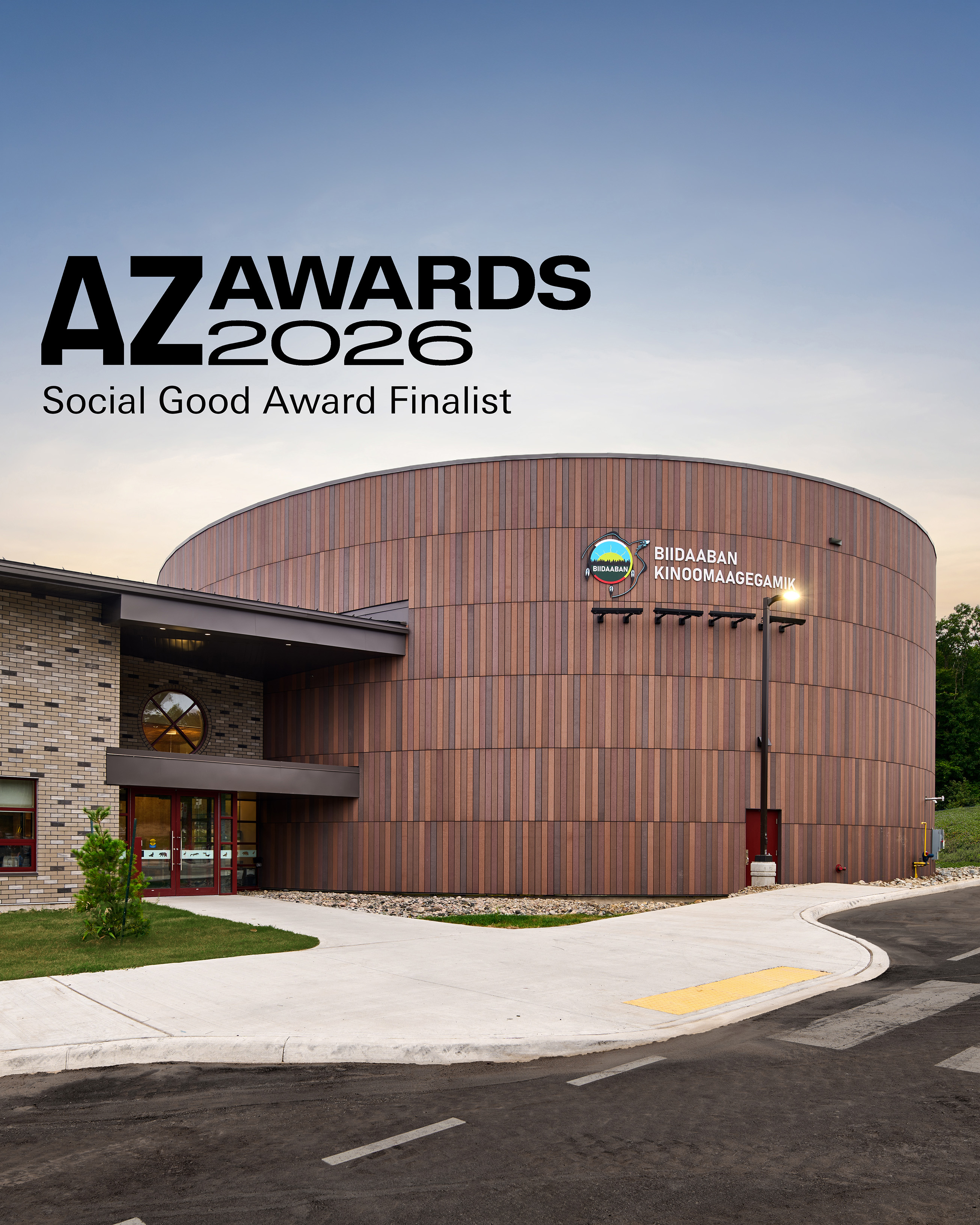
The Challenge: A School That Had to Be More Than a School
Sagamok Anishnawbek needed more than a new school; they needed a place that could support learning while strengthening identity, culture, and connection for the entire community.
Meeting that need demanded a bold and different approach, so the status quo was not an option.
Education spaces in Indigenous communities often carry expectations beyond academics alone. They must support language, ceremony, community gathering, and daily life, while responding to climate, geography, accessibility, and long‑term resilience.
For Sagamok Anishnawbek, the challenge was immediate and profound: not just building infrastructure, but delivering a place true to who they are, how they gather now, and how future generations will learn and grow.
Listening Before Designing
The project team began not with blueprints, but with conversations. By engaging Sagamok Anishnawbek leadership, Elders, educators, families, and students early on, they built a school around what the community truly needed, while avoiding costly missteps.
These discussions shaped decisions from the earliest stages, influencing how the building would be positioned on the land, how people would move through it, what materials would be used, and how spaces could support both daily learning and community use.
Out of this timely collaboration, Biidaaban Kinoomaagegamik — “the coming of the dawn” — emerged: a JK–Grade 8 school built alongside the needs of the community it serves.

Designing With Land, Culture, and Daily Life in Mind
Located along a natural ridge near the La Cloche Range, the school follows the land’s contours rather than reshaping them. Safe, intuitive pathways respect the site and reinforce relationships to land and water that are central to Anishinaabe culture.
Inside, the layout supports connection. Shared spaces, including the gymnasium, cafeteria, multipurpose rooms, and cultural areas, form the heart of the building and can operate independently from classrooms. This allows the school to function as the community’s primary hub after hours, hosting gatherings, ceremonies, recreation, and language programs.

Culture and Equity Built into Everyday Use
Cultural continuity is not treated as a symbol or feature. It is embedded in the day‑to‑day experience. Anishinaabemowin, the traditional language of the Sagamok Anishnawbek, appears first on all signage, supported by English and Braille, reinforcing language, identity, and accessibility throughout the building.
Dedicated spaces for language and ceremony ensure cultural practices are part of daily routines. Natural, locally sourced cross‑laminated timber brings warmth and durability to classrooms and shared spaces, strengthening connection to the land while supporting long‑term performance.
Accessibility and safety are equally intentional. Clear sightlines, abundant daylight, and intuitive circulation help users of all ages and abilities navigate the building with confidence. Universal washrooms, low‑slope pathways, tactile indicators, dual‑height handrails, and accessible stage access are fully integrated in the design.


The Outcome: A Building That Strengthens Community
The impact of this project moves beyond the finished school. Collaboration with local contractor Z’gamok Construction drove immediate employment and skills development within the community, building capacity throughout construction.
Today, Biidaaban Kinoomaagegamik operates as both a place of learning and a community anchor, supporting education, culture, and community life under one roof.
Why Biidaaban Kinoomaagegamik Matters
Biidaaban Kinoomaagegamik is now a 2026 AZ Awards finalist in the Social Good category, a recognition that honours projects advancing equity and positive collective impact.
For Sagamok Anishnawbek, this reflects a story shaped by listening, partnership, and respect, and demonstrates what’s possible when communities are meaningfully involved in shaping their own spaces.
If this project resonates with you, please vote for the Sagamok Anishnawbek project for the Social Good Award here
Your vote helps spotlight community-led, socially responsible projects like this one. Join us in championing collaboration and stewardship.
